
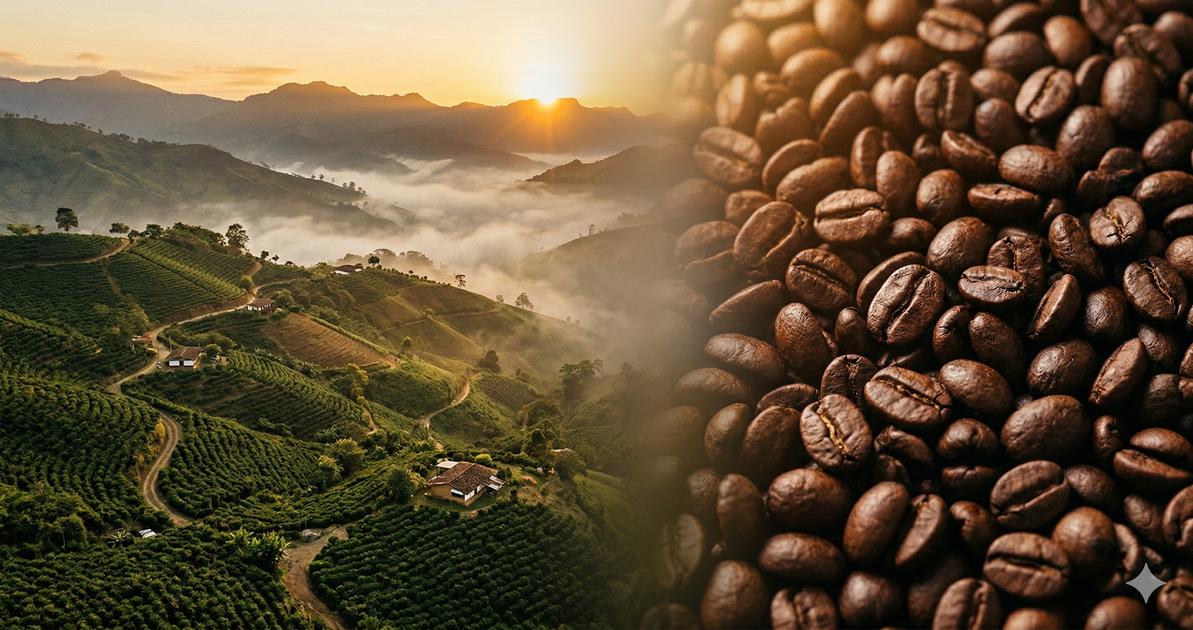
Walk into a good Dublin café these days, and chances are the barista will hand you a flat white made with Colombian beans. It’s no accident. Over the past five years, Irish specialty coffee has undergone a quiet revolution—and Colombian coffee is leading it.
The Irish Coffee Renaissance
Ireland’s coffee culture used to be simple: instant coffee at home, mediocre supermarket beans, or mediocre espresso at chains. That’s changed.
Since around 2018, Dublin (and increasingly other Irish cities) has seen an explosion of specialty coffee shops—places that:
- Source beans directly from roasters
- Train baristas to pull consistent shots
- Care about water quality, temperature, and grind
- Educate customers about origin and flavor
This shift was imported from Melbourne and Seattle but has taken on a distinctly Irish character. There’s a real community building around coffee here now.
And Irish café owners quickly realized: Colombian coffee is perfect for this market.
Why Colombian? Three Reasons
1. Consistency & Reliability
Colombian coffee’s reputation for consistency isn’t marketing. It’s real.
Unlike single-origin coffees from smaller origins (Ethiopia, Kenya, small producer lots), Colombian coffee from major regions like Huila is reliably, predictably excellent. This matters enormously for café operations:
- Standardized quality: Buy from a trusted source, expect the same flavor profile for months
- Trainable for baristas: The coffee behaves predictably in espresso machines (dosing, tamping, extraction time stays consistent)
- Forgiving: If a barista has an off day, Colombian coffee’s balanced profile is more forgiving than a delicate single-origin
For a café manager, consistency = fewer customer complaints, easier staff training, more predictable profit margins.
2. Balanced Flavor for Milk Drinks
Irish coffee culture is dominated by milk-based drinks: flat whites, cappuccinos, lattes. This is different from London or Berlin, where espresso shots are more popular.
Here’s the thing: Not all coffee works well with milk.
- Over-bright, floral coffees (Ethiopia, Kenya): Get lost in milk. The delicate aromatics disappear.
- Heavy, earthy coffees (Sumatra, Brazil): Can taste muddy and flat with milk.
- Balanced, sweet coffee (Colombia): Shines with milk. The sweetness becomes caramel, chocolate notes bloom, the body supports the milk without disappearing.
An Ethiopian single-origin in a cappuccino tastes thin. Sabor de Montaña tastes luxurious.
Irish café owners serving milk-based drinks naturally gravitate toward Colombian coffee. It makes their customers happier.
3. The Ethical Story Sells
Here’s something often overlooked: Irish consumers care about ethics more than most.
Fair-trade coffee started in Ireland. Fairtrade certification has deeper penetration here than most markets. There’s a strong cultural value placed on:
- Direct farmer relationships
- Environmental sustainability
- Community investment
- Transparency in supply chains
Colombian coffee, especially when sourced directly (not through commodity brokers), aligns perfectly with these values. A Dublin café owner can honestly tell customers:
“This coffee comes from a family farm in Huila, Colombia. We pay fair prices, the farmer invests in sustainable practices, and the coffee is roasted fresh for us.”
That story resonates with Dublin’s affluent, educated, socially-conscious café customers.
Compare this to generic “Colombian Coffee” from industrial suppliers—no story, no relationship, no soul.
The Direct-Source Advantage
Over the past 5–10 years, a critical shift has happened: more Irish cafés are sourcing directly from roasters who have direct farmer relationships.
Instead of buying pre-roasted commodity coffee from distributors, they’re partnering with:
- Small-batch roasters with direct Colombian connections
- Roasters who visit farms, know farmers by name, pay premiums
- Roasters who can tell the story of which farm the beans came from
This is revolutionary because:
For the café: They get fresher coffee (roasted 1–2 weeks vs. 2–3 months ago), more control over roast profiles, and a compelling story to tell customers.
For customers: They taste the difference. Fresh, direct-sourced Colombian coffee tastes noticeably better than industrial coffee.
For Colombian farmers: They get paid 2–3x more than commodity prices, invest in improvements, and have sustainable livelihoods.
This is why you see Dublin cafés proudly displaying: “Direct-trade Colombian, roasted by [local roaster], from [specific farm].”
The Competition is Real
What makes this trend fascinating is that Colombian coffee is competing against other excellent origins for café shelf space.
Why choose Colombian over:
Ethiopian Yirgacheffe?
- Ethiopians are brighter, more floral
- They’re stunning as pour-overs or single shots
- But they get lost in milk, and farmers are often poorly paid
- Colombian offers better milk-drink performance and ethics
Kenyan AA?
- Kenyans are exceptional—complex, wine-like
- But they’re expensive and harder to source directly
- Colombian offers similar quality at better value
Brazilian Bourbon?
- Brazilians are smooth and safe
- But they’re over-represented (lowest-common-denominator coffee)
- Colombian offers more character and complexity
Rwandan/Burundian?
- East African coffees from these countries are rising in quality
- But they’re still less established in Irish market than Colombian
- Colombian has the relationships and infrastructure already in place
Smart café owners choose Colombian because it wins on the combination of quality + consistency + ethics + value + story.
The Barista Advantage
Here’s something often overlooked: baristas prefer working with Colombian coffee.
Why? Because it’s:
- Consistent (making good espresso is easier)
- Forgiving (pulling a mediocre shot is less likely to taste bad)
- Sweet (customers compliment the coffee more often)
- Sellable (it tells a story, customers feel good buying it)
A barista pulling shots all day prefers coffee that responds predictably to their technique. Colombian coffee, with its stable acidity and balanced body, is genuinely easier to work with than temperamental single-origins.
This might seem like a small thing, but happy baristas make better coffee. And happy baristas stay longer, train better, and develop into the skilled coffee professionals that define good cafés.
The Trend is Growing
Here’s evidence:
Dublin’s specialty coffee map (2025): Walk through Baggot Street, South William Street, or the Docklands. Of 10 specialty cafés, you’d find Colombian coffee in 7–8. Five years ago? Maybe 2–3.
New roasters entering the market: Specialty roasters in Dublin increasingly focus on Colombian direct-source relationships. It’s the easiest origin to build a sustainable, ethical supply chain from.
Café owners talking about it: I’ve spoken to barista managers and café owners across Dublin. Ask them “What’s your signature origin?” and you’ll hear “Colombian” more than anything else. It’s become the coffee of Ireland’s specialty scene.
Customer feedback: Café owners report more positive comments about Colombian coffee than any other origin. It’s what people come back for.
The Future
I think this trend will deepen for three reasons:
1. Climate change: African origins (Ethiopia, Kenya) are facing production challenges. Colombian coffee, while not immune, has more resilient geography and established supply chains.
2. Premiumization: As Irish coffee drinkers become more sophisticated, they’re willing to pay €5–6 for an excellent cappuccino. Colombian coffee, positioned as “direct-trade ethical single-origin,” justifies premium pricing.
3. Sustainability: As consumers increasingly care about climate impact and farmer welfare, Colombian coffee’s direct-source story becomes more valuable.
A Personal Note
I was skeptical when I first started noticing Colombian coffee everywhere in Dublin. I thought it was just commodity coffee being rebranded as “specialty.”
But I visited a café using our Sabor de Montaña, watched a barista pull a shot, tasted it in a flat white. The coffee was clearly good—sweet, balanced, clean finish. A customer asked about the origin. The barista told the story: small farm in Huila, direct relationship, fair prices.
The customer nodded, satisfied. They’d chosen the right café.
That’s when I understood: it’s not about Colombian coffee being trendy. It’s about Colombian coffee solving real problems—for café owners, baristas, customers, and farmers.
That’s why it’s here to stay.
Discover the Colombian coffee Dublin’s best cafés are choosing. Shop Sabor de Montaña
Are you a café owner in Ireland? We’d love to work with you. Learn about wholesale